ALL CATEGORIES

Browse by Category

Featured Suppliers

Featured verified suppliers in Laser Equipment

Featured Products

Top-selling and featured products in Laser Equipment
Smart Sourcing Guide

Essential tips for successful procurement

Find Products Efficiently

Quickly locate what you need:
Browse specialized subcategories above
Use precise keywords in our search
Filter by specifications & certifications

Verify Supplier Credentials

Ensure reliable partnerships:
Look for the badgeVerified Supplier
Check supplier certifications
Review transaction history

Industry Insights

Key developments and opportunities about Laser Equipment

  • Applications

    Laser equipment is widely used in industrial applications such as precision cutting in metal fabrication, detailed engraving on consumer goods, efficient welding in automotive assembly, and accurate marking for traceability in electronics and medical devices.
  • Industry Trends

    The industry is advancing with trends like fiber laser technology for higher efficiency, ultrafast lasers for micro-machining, and integration with automation systems to boost productivity and reduce operational costs in smart manufacturing.
  • Sustainability & Compliance

    Compliance requires adherence to international standards such as CE marking for European markets, FDA regulations for medical devices, and IEC 60825 for laser safety, alongside environmental trends promoting energy-efficient designs and reduced emissions.
  • Buying Guide

    When procuring, evaluate suppliers based on certifications like ISO 9001, technical expertise, and after-sales support; for product selection, prioritize application-specific needs, precision levels, and power efficiency to ensure optimal performance and value.
FAQ

Common Sourcing Questions

Common Sourcing Questions in Laser Equipment

What is the minimum order quantity (MOQ) for laser cutting machines?

The typical MOQ for laser cutting machines varies but often starts at 1 unit for standard models to accommodate small businesses, while bulk orders may require 5-10 units for cost efficiency. We recommend discussing customization options like power settings or software integration to meet your specific needs. Always verify suppliers adhere to international certifications such as ISO 9001 and CE for quality assurance, and inquire about sample availability to test performance before committing. This approach ensures you get reliable equipment tailored to your production scale without unnecessary inventory costs.

Can laser engraving machines be customized for specific materials like wood or metal?

Yes, laser engraving machines can be customized to handle diverse materials including wood, metal, plastic, and glass. Key modifications involve adjusting laser power, focus lenses, and software settings for precise etching. Suppliers typically offer prototyping services to test on your materials, with lead times of 1-2 weeks. Ensure the machine complies with CE certification for safety and durability. Discuss packaging details like custom crates to prevent damage during shipping, and confirm MOQs to optimize your order based on material-specific requirements.

What certifications should I check when sourcing laser welding machines?

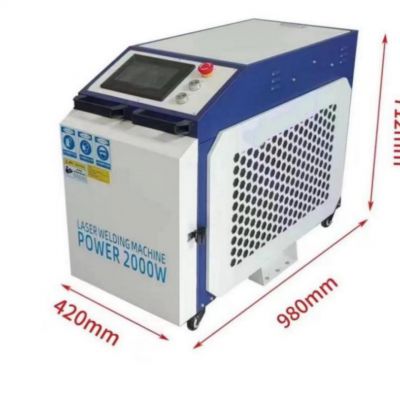
When sourcing laser welding machines, prioritize certifications like ISO 9001 for quality management and CE for European safety standards, ensuring compliance with international regulations. Additionally, verify FCC certification if operating in the US for electromagnetic compatibility. These certifications guarantee reliable performance and reduce risks in industrial applications. Ask suppliers about MOQs, which often start at 1-2 units, and sample availability to test weld precision. Packaging should include shock-resistant materials, and shipping options like air freight for faster delivery to maintain project timelines.

How long does the sampling process take for laser marking machines?

The sampling process for laser marking machines typically takes 2-3 weeks, including design consultation, prototype development, and testing on your materials. Suppliers may charge a nominal fee for samples, which can be waived against future orders. Ensure samples reflect customization options like UV laser settings for high-contrast marks. Packaging is crucial—look for anti-static and moisture-proof cases to protect sensitive components during transit. Confirm MOQs of 1-5 units for production runs and check certifications such as CE to ensure durability and regulatory compliance.

What packaging standards are used for laser cleaning equipment to ensure safe shipping?

Laser cleaning equipment is packaged to international standards using reinforced wooden crates, foam inserts, and moisture barriers to prevent damage from shocks and humidity during transit. Suppliers often follow ISO 9001 guidelines for quality control, ensuring components like laser heads are securely fastened. Discuss customization for portability if needed. MOQs typically start at 1 unit, and shipping options include sea freight for cost-effectiveness or express air for urgent needs. Always verify CE certification for safety and request handling instructions to maintain equipment integrity upon arrival.

Do suppliers offer customization for laser equipment parts, such as replacement lenses?

Yes, suppliers commonly offer customization for laser equipment parts like lenses, nozzles, and cooling systems to match specific machine models or applications. The process involves submitting technical drawings, with MOQs starting at 50-100 units for cost efficiency. Prototyping takes 1-2 weeks to ensure fit and performance. Packaging includes labeled, anti-static bags and sturdy boxes for international shipping. Confirm certifications such as CE for safety and inquire about lead times and transport methods like DDP (Delivered Duty Paid) to avoid customs delays.

What are the key considerations for choosing a laser scribing machine supplier?

Key considerations include verifying certifications like ISO 9001 for quality control and CE for electrical safety, ensuring the machine meets industry standards for precision scribing. Evaluate customization options for materials such as solar panels or electronics, with MOQs often at 1-3 units. Sample testing is essential—allow 2-3 weeks for prototypes to assess accuracy. Packaging should feature shock-absorbent materials, and discuss shipping terms like FOB for cost control. Also, assess after-sales support for maintenance to secure reliable long-term procurement.

Other Industries

Explore more categories