ALL CATEGORIES

Browse by Category

Featured Suppliers

Featured verified suppliers in Drilling Tools

Featured Products

Top-selling and featured products in Drilling Tools
Smart Sourcing Guide

Essential tips for successful procurement

Find Products Efficiently

Quickly locate what you need:
Browse specialized subcategories above
Use precise keywords in our search
Filter by specifications & certifications

Verify Supplier Credentials

Ensure reliable partnerships:
Look for the badgeVerified Supplier
Check supplier certifications
Review transaction history

Industry Insights

Key developments and opportunities about Drilling Tools

  • Applications

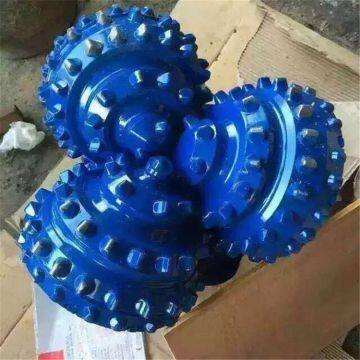
    Drilling tools are widely used in oil and gas exploration, mining, and construction for creating boreholes, with key components like drill bits for rock penetration, drill rods for torque transmission, and stabilizers for borehole stability in demanding operations globally.
  • Industry Trends

    Industry advancements include smart technologies such as sensor-equipped drill bits and automated drilling systems, leveraging AI for real-time optimization, alongside trends like polycrystalline diamond compact (PDC) bits and robotics to enhance efficiency and safety in challenging environments.
  • Sustainability & Compliance

    Compliance with international standards like API Spec 7-1 for drill stem components and ISO 10424 is essential, while environmental trends focus on reducing emissions, noise control, and using eco-friendly lubricants to meet sustainability goals.
  • Buying Guide

    Procure drilling tools by assessing suppliers for certifications and reliability, and select products such as drill bits or collars based on application needs, material durability, compatibility with equipment, and overall cost-effectiveness.
FAQ

Common Sourcing Questions

Common Sourcing Questions in Drilling Tools
What certifications should I verify when purchasing industrial drill bits?

For drill bits, prioritize ISO 9001 for quality management and CE marking for safety compliance to ensure durability in harsh conditions. Verify material certifications like ASTM standards for hardness and wear resistance. MOQ typically starts at 500 units, with customization options for coatings. Request samples for performance testing before bulk orders. Packaging includes anti-corrosion treatments and sturdy boxes for safe shipping. Always check test reports to confirm specifications and reduce procurement risks.

How can I customize drill rods for specific applications, and what is the MOQ?

Custom drill rods can be tailored for length, diameter, and material grades like alloy steel, with MOQ often at 100 units. Submit your specifications for a quote; the process includes design approval and sample production for fit testing. Ensure rods meet API standards for oilfield use. Lead time is 4-6 weeks post-sample approval. Packaging uses protective sleeves to prevent bending during transit. Samples are available for a fee to verify quality before committing to larger orders.

What packaging is recommended for drill sleeves to prevent damage in international shipping?

Drill sleeves should be packed in seaworthy wooden crates or reinforced cardboard with foam inserts to absorb shocks and prevent corrosion. For international transit, use moisture-barrier wraps and palletizing for stability. MOQ starts at 200 pieces for standard sizes, with customization for inner diameters. Confirm certifications like CE for safety. Always request samples to inspect packaging effectiveness and tool integrity. This minimizes damage risks and ensures cost-efficient logistics for bulk orders.

How do drilling stabilizers enhance performance, and what certifications are essential?

Drilling stabilizers improve efficiency by reducing vibration and maintaining borehole accuracy, especially in deep wells. Look for ISO 9001 and API Q1 certifications for quality assurance, ensuring materials like hardened steel meet industry standards. MOQ is typically 50 units, with customization for formation-specific designs. Samples are available for field testing. Packaging involves sturdy crates to withstand rough handling. Verify non-destructive testing reports to confirm durability before procurement.

Can I request samples of drilling jars before placing a bulk order?

Yes, drilling jar samples are available for testing impact resistance and functionality, usually for a nominal fee. This allows evaluation in real-world conditions before committing. The sampling process takes 2-3 weeks, with MOQ starting at 30 units for bulk orders. Ensure jars comply with API standards and undergo hydrostatic testing. Custom options like adjustable release mechanisms can be discussed. Packaging includes rust-proof coatings and secure crating for safe international shipping.

What materials are ideal for drill collars, and what lead time should I expect for custom orders?

Drill collars are best made from high-strength alloy steel or non-magnetic alloys for specialized applications, with lead times of 6-8 weeks after design approval. MOQ is typically 20 pieces. Certifications like ISO 9001 ensure material traceability and performance. Samples can be provided for dimensional checks. Packaging uses heavy-duty crates for ocean freight to prevent damage. Discuss customization for weight and thread types during procurement to optimize costs and efficiency.

How do I ensure the quality of other drilling tools like reamers or subs during sourcing?

For tools like reamers and subs, verify quality through ISO 9001 certifications and material test reports for traceability. Request samples to assess fit and performance in your operations. MOQ averages 100 units, with customization for thread sizes and coatings. Packaging should include palletized crates with anti-rust treatments for international shipping. Always review non-destructive testing data and consider air or sea freight options based on urgency to ensure reliable procurement.

Other Industries

Explore more categories