ALL CATEGORIES

Browse by Category

Featured Suppliers

Featured verified suppliers in Solar & Renewable Energy

Featured Products

Top-selling and featured products in Solar & Renewable Energy
Smart Sourcing Guide

Essential tips for successful procurement

Find Products Efficiently

Quickly locate what you need:
Browse specialized subcategories above
Use precise keywords in our search
Filter by specifications & certifications

Verify Supplier Credentials

Ensure reliable partnerships:
Look for the badgeVerified Supplier
Check supplier certifications
Review transaction history

Industry Insights

Key developments and opportunities about Solar & Renewable Energy

  • Applications

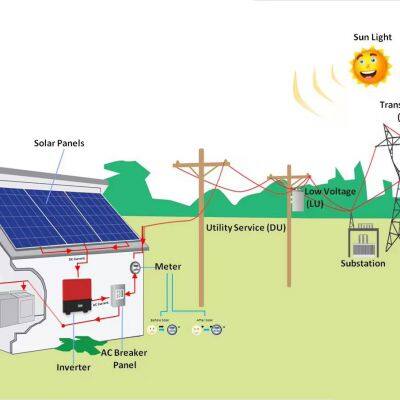
    Solar & Renewable Energy systems are deployed in residential, commercial, and industrial settings for electricity generation, heating, and off-grid power, utilizing products like solar panels and BIPV for sustainable applications across diverse sectors.
  • Industry Trends

    Emerging trends include high-efficiency solar cells (e.g., PERC), integrated battery storage, and AI-driven automation for energy management, enhancing performance and reducing costs in solar installations.
  • Sustainability & Compliance

    Compliance requires adherence to international standards like IEC 61215 for photovoltaic modules and CE marking, alongside environmental initiatives such as recycling programs and eco-friendly manufacturing practices.
  • Buying Guide

    Procurement advice: Assess suppliers for certifications (e.g., ISO 9001), reliability, and warranty; select products based on efficiency, durability, and application fit, such as solar brackets or controllers for specific needs.
FAQ

Common Sourcing Questions

Common Sourcing Questions in Solar & Renewable Energy
What certifications are required for solar panels to ensure international compliance?

For solar panels, essential certifications include ISO 9001 for quality management, IEC 61215 for performance standards, and CE marking for European markets. We offer MOQ starting from 100 units, with custom options like wattage adjustments. Samples are available for testing efficiency before bulk orders. Packaging is weather-resistant with reinforced corners, and we support FOB or CIF shipping via sea freight to ensure safe delivery. This simplifies procurement by meeting global regulatory requirements.

Can solar mounting brackets be customized for specific installation environments?

Yes, solar brackets can be tailored to fit various structures, such as sloped roofs or ground mounts, through a design consultation process. MOQ typically starts at 500 sets, with prototypes provided for approval to ensure fit and durability. Certifications like ISO and CE cover material strength. Packaging includes anti-corrosion coatings and crates for transit, and we arrange shipping via sea freight to minimize costs. This customization enhances project efficiency and reduces on-site adjustments.

What is the minimum order quantity for solar charge controllers, and can samples be provided?

The MOQ for solar charge controllers is generally 200 units for standard models, with flexibility for voltage or feature customization. We provide free samples for functional testing, validated against certifications like CE and RoHS for safety. Packaging uses anti-static materials to protect components, and shipping options include air freight for quick delivery or sea freight for bulk orders. This approach allows buyers to verify performance before committing to large purchases, streamlining the sourcing process.

How are solar vacuum tubes packaged to prevent damage during international shipping?

Solar vacuum tubes are secured in foam-lined cartons with individual sleeves to absorb shocks, ensuring minimal breakage. MOQ starts at 100 tubes, with samples available for quality checks against certifications like ISO 9001. Packaging is reinforced for long-haul transit, and we coordinate sea freight in wooden crates for bulk shipments. This method reduces transit risks and supports reliable delivery, with options for custom packaging based on destination requirements.

Can BIPV systems be adapted to integrate with unique building designs?

Absolutely, BIPV solutions can be customized for architectural integration, including size, color, and transparency variations. The process involves collaborative design, prototype sampling for approval, and MOQ from 50 square meters. Certifications like CE and UL ensure structural and electrical safety. Packaging is tailored for fragile glass elements, and we manage shipping via sea or air freight to global sites. This customization facilitates seamless installation and compliance with building codes.

What shipping methods are available for solar-powered ventilation fans?

For solar fans, shipping options include express air freight for urgent orders or cost-effective sea freight for bulk quantities. MOQ starts at 300 units, with samples provided to test airflow and durability. Certifications such as CE and ISO cover performance standards. Packaging uses shock-absorbent materials to protect during transit, and we handle logistics to ensure timely delivery. This flexibility helps buyers optimize costs and reliability in their supply chain.

How do you handle quality control for solar cells during manufacturing?

Quality control for solar cells involves rigorous testing at each production stage, adhering to certifications like IEC 61215 for efficiency and ISO 9001 for consistency. MOQ is typically 1000 units, with samples available for efficiency verification. Custom specs are accommodated after prototype approval. Packaging includes moisture-resistant barriers, and shipping is arranged via sea freight for secure delivery. This process ensures high yield and reliability in renewable energy projects.

Other Industries

Explore more categories